USB Power and Charging: From 2.5 Watts to a Negotiation
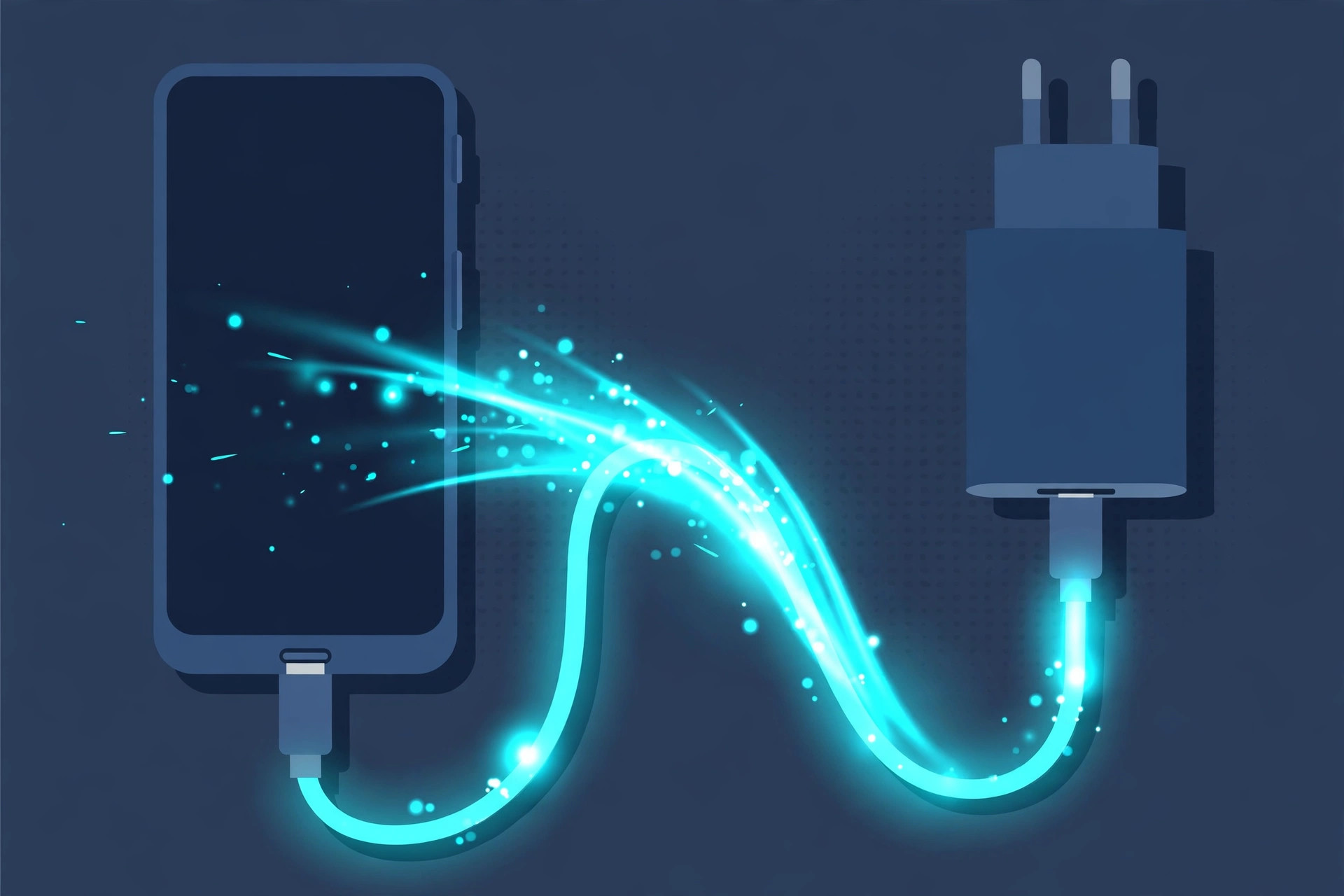
The humble beginnings
USB began as a data connector that happened to carry 5 volts at up to 500 milliamps, enough for mice and keyboards and a slow sip for early phones. As phones grew hungrier, makers cheated cheerfully beyond the specification, and charging became a lottery of chargers, cables and hope. The standards caught up in stages: battery charging modes up to 1.5 amps, then USB Power Delivery, which turned the cable into a negotiation. With Power Delivery the charger and device agree a contract, choosing from fixed voltages up to 20 volts, and in the extended range up to 48 volts at 5 amps, 240 watts in all.
Negotiation, cables and electronic markers
The contract matters because power is volts times current, and raising voltage delivers watts without punishing currents and cable losses. Above 3 amps or 20 volts, the cable itself must carry an electronic marker chip declaring its limits; unmarked cables are capped at 60 watts for safety. Proprietary fast-charge systems from phone makers run their own negotiations on the same connectors, sometimes at high current and low voltage with thick proprietary cables, which is why a drawer of USB-C leads is not a drawer of equals. The honest measure of any combination is the wattage the device reports while charging.
Working out your own charging maths
The arithmetic is the electricity cost and battery arithmetic of this site wearing a new hat. A phone with a 15 watt-hour battery charging at an average 20 watts, at roughly 85 percent end-to-end efficiency, fills in about an hour, which matches the advertised claims that quote the fast first half of the curve; charging slows near full to protect the cell, so the last 20 percent takes a disproportionate share. For cost, even daily fast charging of a phone uses a few kilowatt-hours a year. The devices worth auditing are the laptop docks and monitors that feed whole desks through one negotiated cable. Cable quality is the invisible term in every charging equation. The conductors feeding power inside a USB cable have resistance like any wire, and at 3 to 5 amps a thin, long cable can drop half a volt or more, which older 5 volt charging felt as mysteriously slow charging and which Power Delivery escapes by raising the voltage. This is the voltage drop story of the cable guides wearing a pocket size, and it explains the market for short, thick, honestly rated leads. When a device charges slowly, the suspects in order are the negotiated contract, the cable, and only then the battery, and a ten-dollar USB power meter that displays the live volts and amps settles the argument in seconds.
Try the numbers yourself
The free calculator that goes with this guide:
Open the electricity cost calculator