Soldering for Beginners: Heat, Wetting and the Shiny Fillet
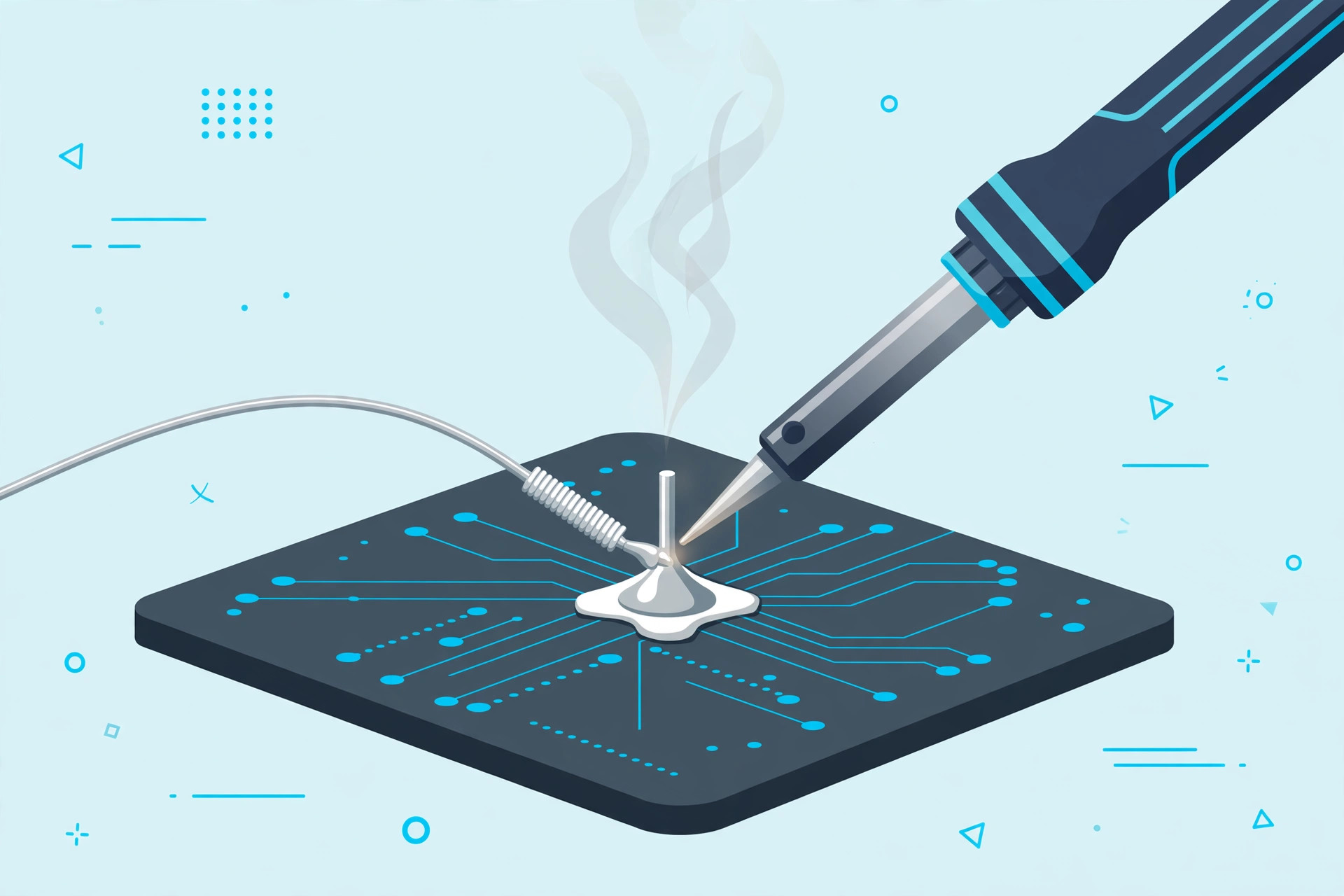
What a solder joint really is
Soldering is not gluing with metal. A good joint is a metallurgical bond: molten solder wets the copper surfaces, alloys with them in a thin intermetallic layer, and freezes into a connection that is mechanically sound and electrically excellent. Wetting is the whole game, and it needs three things: clean metal, enough heat, and flux to strip oxides and keep them off while the alloy forms. The classic electronics solder, tin with lead or in modern lead-free form tin with silver and copper, melts around 180 to 220 degrees, and an iron between 300 and 350 degrees gives the joint, not the air, the heat it needs.
The technique that makes shiny joints
Heat the joint, not the solder: touch the iron to the pad and the lead together, feed solder into the heated parts, and watch it flow and wick like water into cloth. The finished joint is smooth, bright and concave, a small volcano hugging the lead. Dull, grainy or blobby joints are cold or disturbed joints, with high resistance and a future as an intermittent fault, the worst kind. Work quickly, two or three seconds a joint, because pads lift and parts cook. Cleanliness rules throughout: a wiped, tinned iron tip, parts that sit still while the solder freezes, and no blowing on the joint to hurry it.
Practice, safety and fixing mistakes
Learn on scrap board and spare resistors, where the only cost of a bad joint is the lesson. Ventilate, because flux fumes are an irritant even when the solder is lead-free, and wash hands after handling leaded solder. Desoldering braid and a solder sucker undo mistakes, which are a normal part of the craft rather than a verdict on it. Joints in series and parallel chains, the dividers and filters of the other guides, all begin as molten metal and confidence. Master the three-second shiny fillet and the entire hobby, from kits to repairs to your own boards, opens up. A small kit list makes the learning curve kinder: a temperature-controlled iron with a fine tip, solder of 0.7 millimetre or so, a brass wool cleaner that does not thermal-shock the tip the way a wet sponge does, side cutters, and a cheap practice board. Rosin flux, in pen or paste, rescues doubtful joints and old component leads. Work on a surface that forgives, under light that shows the shine of a good fillet, and inspect every joint with the same suspicion you would give a stranger's wiring. Ten hours of deliberate practice will put your joints beyond most factory rework you will ever meet, and the skill, once in your hands, stays there for life.
Try the numbers yourself
The free calculator that goes with this guide:
Open the series resistor calculator