Grounding and Earthing Basics: Three Jobs, One Word
One word, three jobs
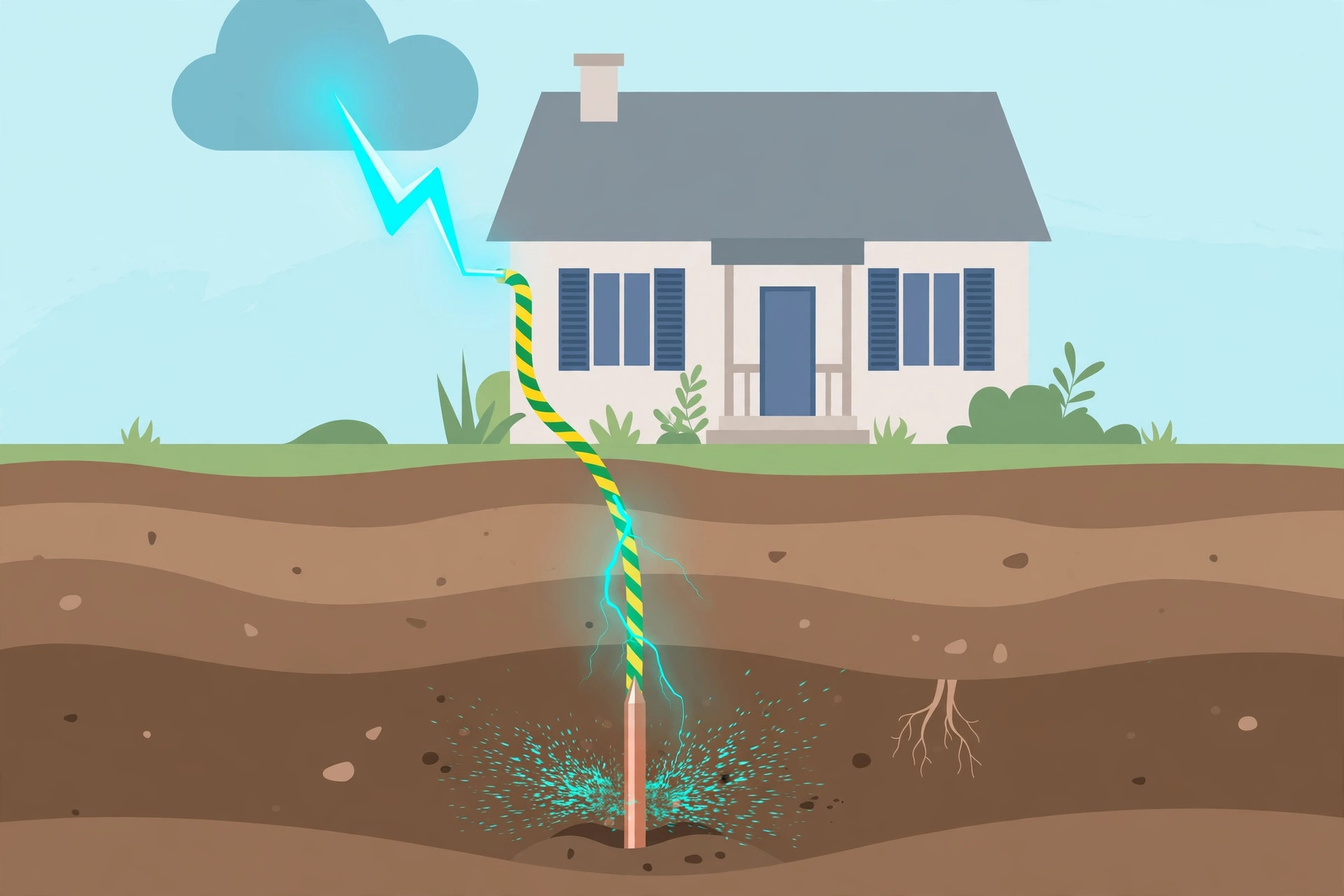
Ground means at least three different things, and confusing them causes real trouble. The safety earth is the green and yellow wire bonded to a metal rod or the supply's earth, existing so that a fault inside an appliance energises its case only briefly before the fuse or breaker clears it, and so touch voltages stay survivable. Signal ground is the reference conductor a circuit measures its voltages against, which may connect to earth at one point or none. Chassis ground is the metalwork itself. A circuit diagram's ground symbol might mean any of them, and part of reading schematics like an engineer is asking which.
Earth as protection, explained plainly
Consider a fault in which the live wire touches a washing machine's metal case. Without an earth connection, the case sits at mains voltage waiting for a person to complete the circuit. With a low-resistance earth, the fault current is enormous, the protective device trips in a fraction of a second, and the case voltage stays low in the meantime. That is why the earth conductor's resistance matters, why it is never fused or switched, and why a residual current device adds a second layer, tripping on the small imbalance of current leaking through a person rather than waiting for a fuse-sized fault.
Ground in circuits: loops, planes and quiet
In signal work, ground is where currents return, and return currents take the path of least impedance, which at high frequency means directly beneath the outgoing trace. Split that path and you build a loop antenna that radiates and receives interference; keep it whole, with a solid ground plane, and circuits go quiet. Ground loops between separately earthed equipment hum at mains frequency in audio systems, cured by bonding and balanced connections rather than by lifting safety earths, which trades a hum for a hazard. The voltage drop calculator is relevant here too: an earth conductor is a cable, and its resistance under fault current is a designed quantity, not an accident. Testing closes the loop between theory and trust. An earth continuity test proves the green and yellow path is whole from socket to appliance; an earth loop impedance test proves it is low enough to clear the protective device in time; and a residual current device has a test button because its mechanism, too, can sleep. In electronics work, an antistatic mat and wrist strap are grounding in miniature, bleeding charge away before it can punch through a gate oxide. The theme through every scale is identical: give unwanted energy a planned, low-resistance route that does not pass through a person or a signal, and verify the route exists rather than assuming the colours of the wires guarantee it.
Try the numbers yourself
The free calculator that goes with this guide:
Open the voltage drop calculator