dBm and Radio Power: From Milliwatts to Whispers
One milliwatt as the zero
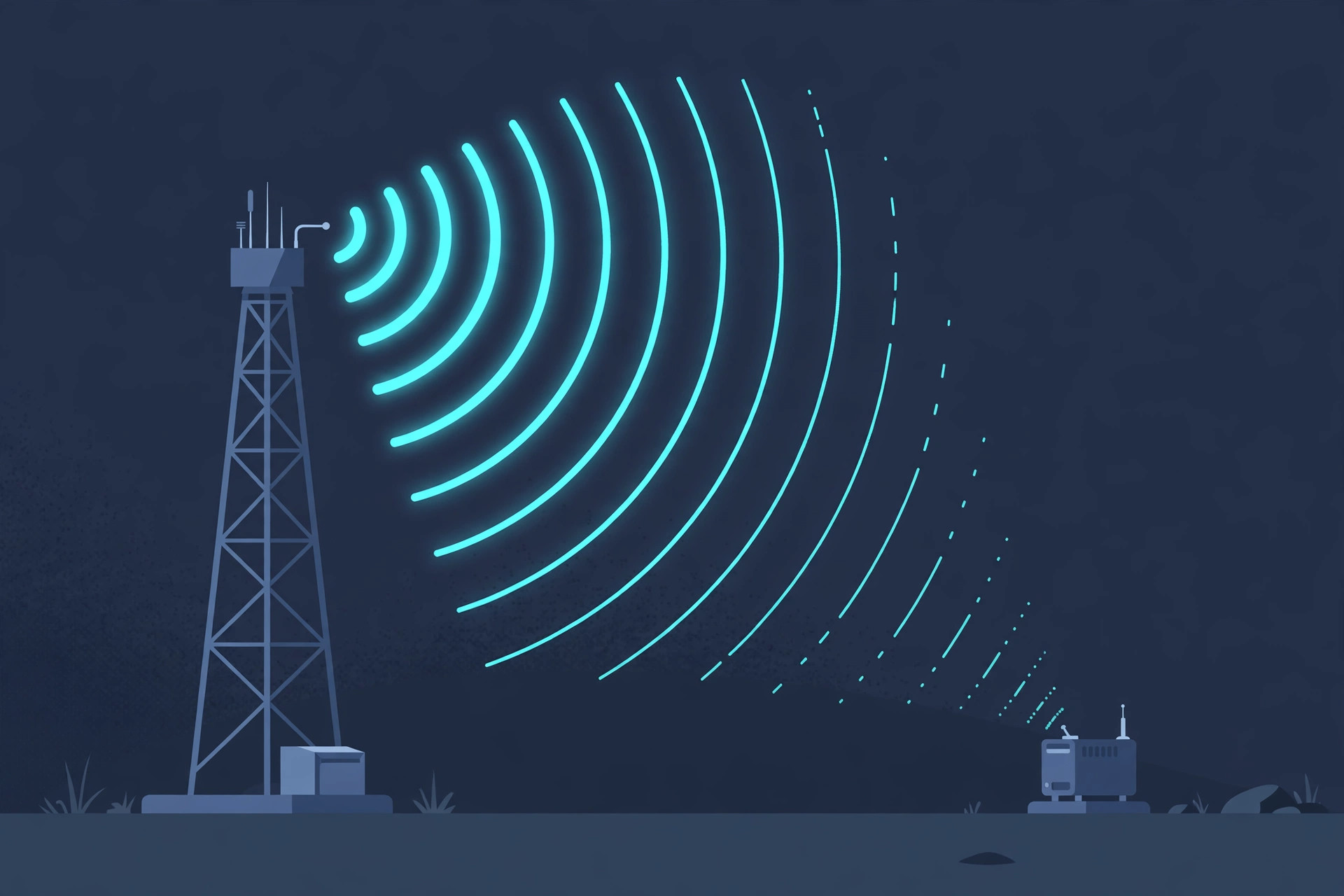
dBm pins the decibel to a fixed reference: one milliwatt. Zero dBm is 1 milliwatt exactly. Plus 10 dBm is 10 milliwatts, plus 20 is 100, and plus 30 dBm is a full watt, a common legal ceiling for Wi-Fi transmitters. Going down, minus 30 dBm is a microwatt and minus 90 dBm is a picowatt, the neighbourhood where a good receiver still pulls intelligible signals out of the noise. Because the reference is fixed, dBm figures from different instruments, datasheets and countries all speak the same language, which is more than can be said for most units in radio work.
Link budgets: the arithmetic of getting through
Every radio link is a sum. Start with the transmitter power in dBm, add the transmitting antenna gain in dBi, subtract the path loss over the distance, add the receiving antenna gain, and what remains must exceed the receiver's sensitivity, also in dBm, with margin to spare. A Wi-Fi access point at plus 20 dBm, losing 70 dB across a house, arriving at a laptop that hears down to minus 90 dBm, has 40 dB in hand. That margin is what walls, rain, people and interference spend. Link budgets are why a satellite broadcasting a few tens of watts can serve a continent: the sums were done honestly first.
Converting without tears
The mental shortcuts cover most needs: add 3 dB to double the power, subtract 3 to halve it, and treat 10 dB as exactly tenfold. Between those landmarks, the calculator earns its keep, turning dBm into watts and milliwatts and back with no logarithm anxiety. Keep one sanity check in mind: a result above about plus 50 dBm is a hundred watts and should make you ask whether a decimal point wandered, because bench equipment rarely lives there. Radio power is where decibels stop being a classroom topic and become the difference between a link that works on paper and one that works on the roof. Receiver sensitivity figures deserve the same care as transmitter power. A sensitivity of minus 90 dBm is meaningless without its conditions: the bandwidth, the modulation and the error rate the receiver must hold. Narrow the bandwidth and the thermal noise floor falls with it, about minus 174 dBm per hertz at room temperature, the deepest quiet physics allows, which is why weak-signal modes with narrow filters hear whispers that voice bandwidths cannot. When you convert a datasheet's dBm into watts and find femtowatt territory, you are not looking at an error; you are looking at the astonishing sensitivity that a century of receiver design has achieved, and the reason antennas and low-noise first stages matter more than raw transmitter power.